
In Angola, coffee does not tell a single story. Two species are cultivated: Arabica and Robusta. They do not thrive in the same landscapes or climates, nor do they reveal the same aromatic balance.
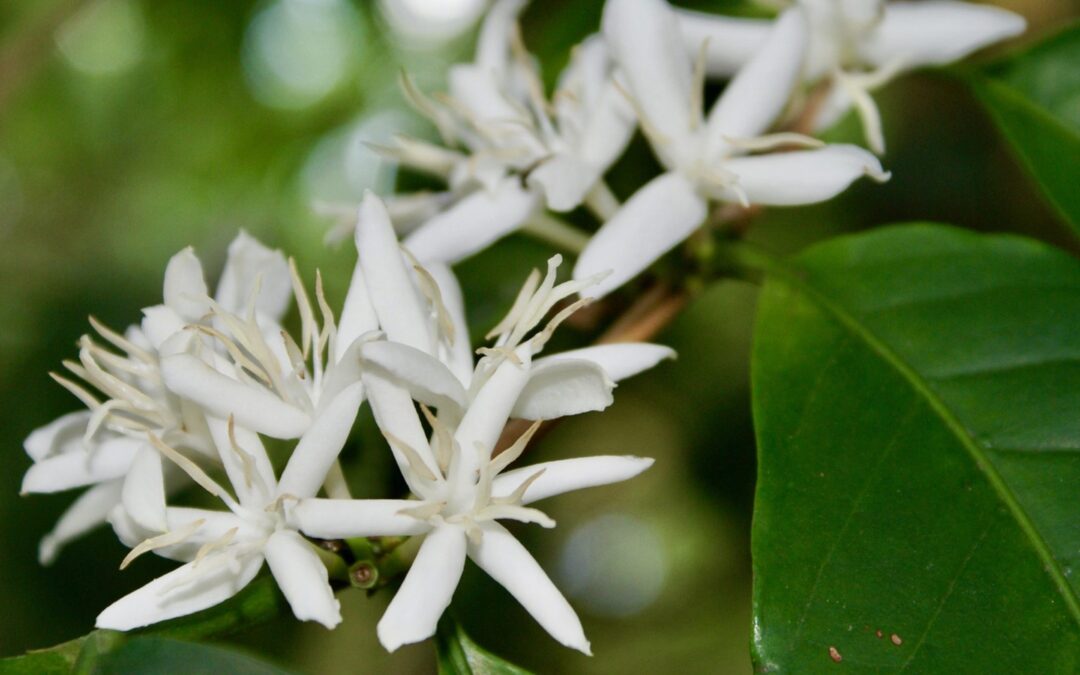
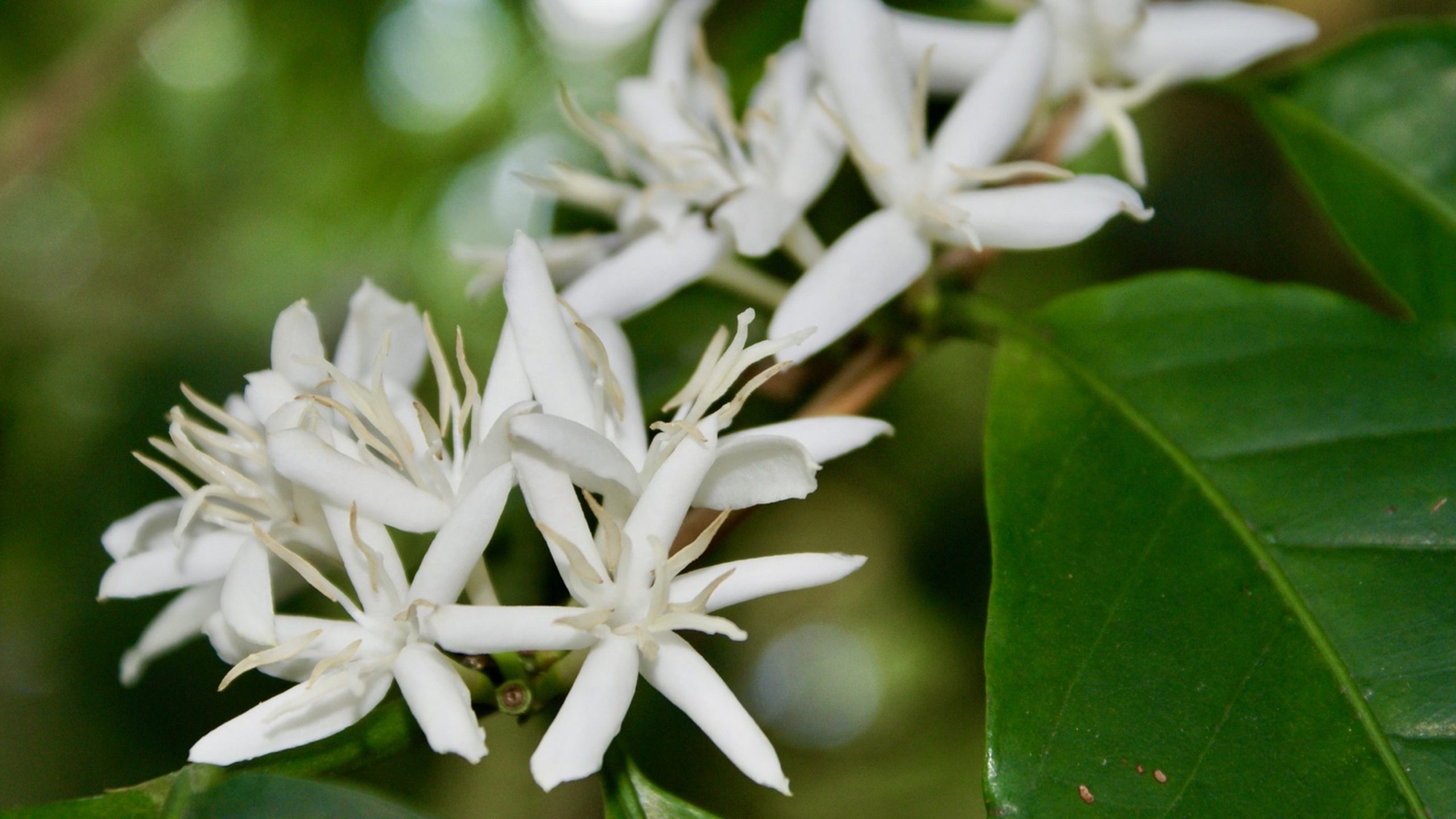
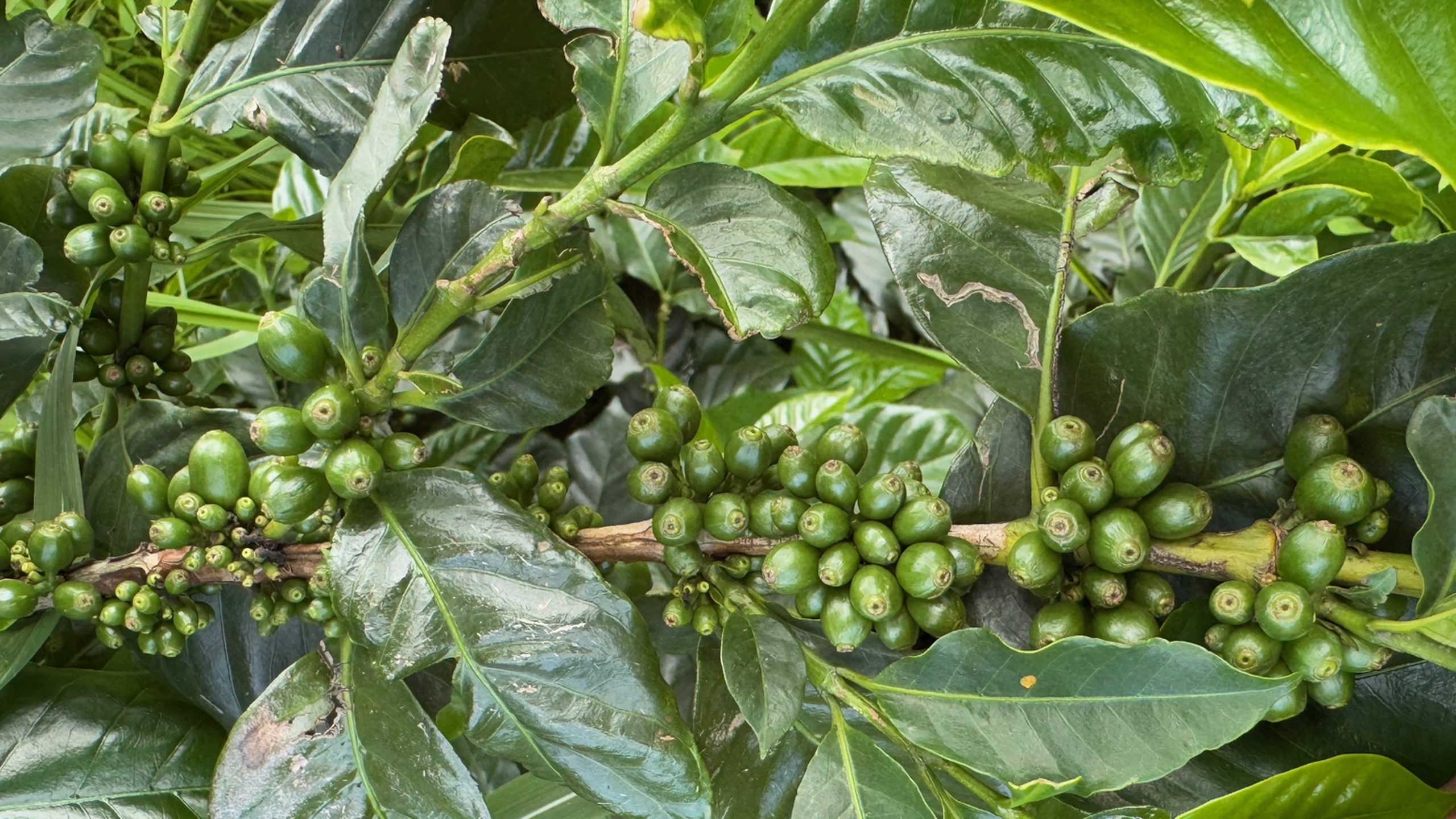
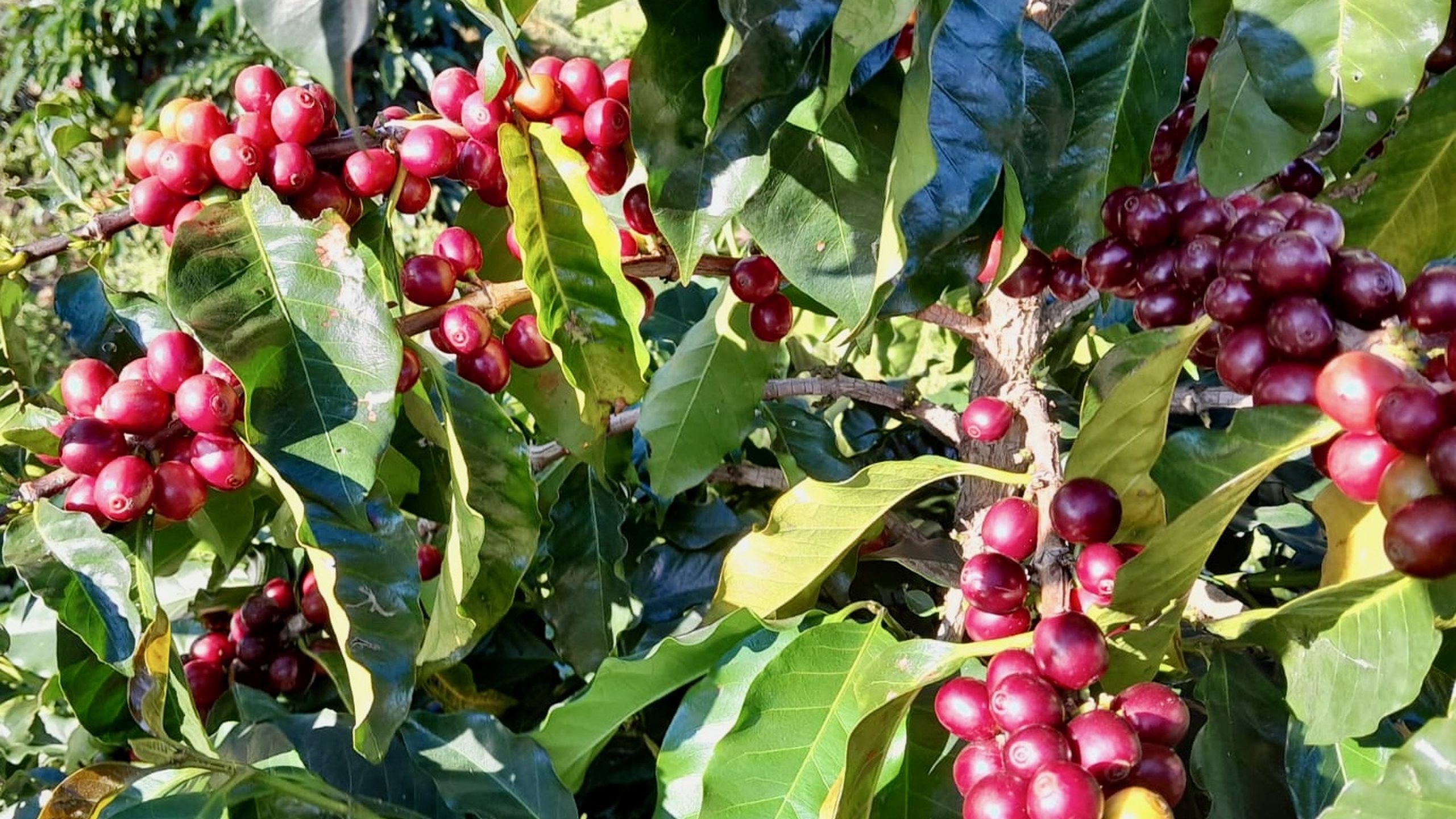
On the heights of Ebanga, in Benguela Province, Fazenda Kavili grows an Arabica coffee of the Caturra variety. After the delicate white blossoms appear the first green cherries. They ripen gradually, until they take on the deep colour that heralds harvest time.
Caturra is an Arabica variety born from a natural mutation of Bourbon. Its compact stature allows for denser planting and makes the cherries more accessible during hand-picking. But this plant requires a careful balance.
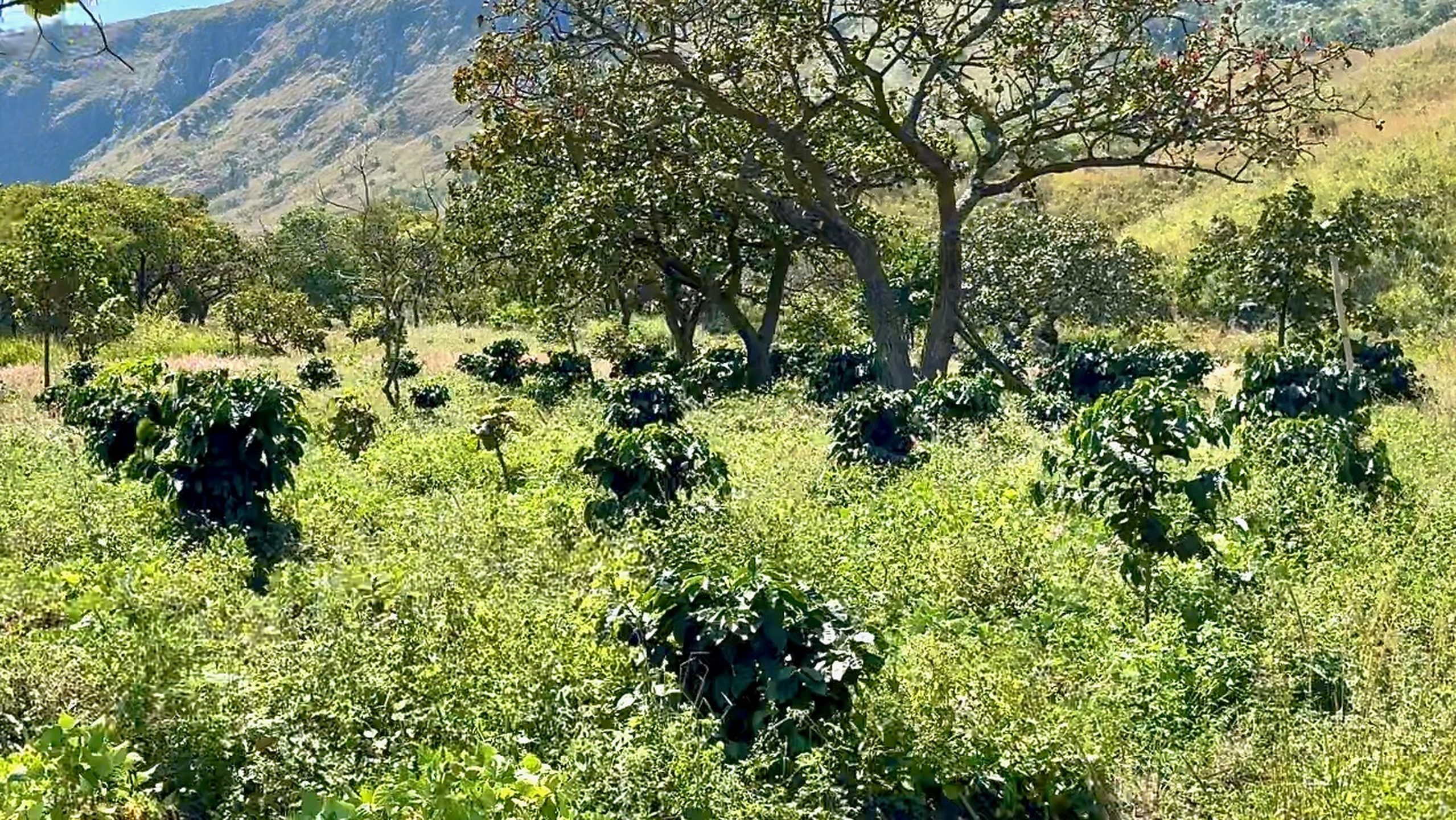
At altitude, the coolness of the mountain lengthens the ripening period. Beneath preserved vegetation, carefully managed shade filters excessive solar radiation, moderates the temperature of the leaves and soil, and reduces the coffee plant’s evaporative demand. The plant thus benefits from a more stable microclimate. On the slopes, excess water drains away naturally. Deep within the porous, well-aerated soil, the roots find the moisture they need to develop.
Robusta belongs to a different geography. It finds its natural strength in the hot, humid regions of the lowlands. Its aroma is often more direct, with roasted, woody or earthy tones. In the cup, it delivers a fuller body, more pronounced bitterness and, at times, a slight astringency. Its higher caffeine content contributes notably to this bitterness.
Arabica Caturra follows another path. Its fragrance is distinguished by its finesse and the richness of its nuances. In the cup, its sweetness and delicate acidity allow the aromas to unfold gradually. At Fazenda Kavili, it reveals subtle lemon notes in particular.
In Ebanga, the coffee plant does not grow in haste. It moves at the pace of the mountain. And in every cup, the mountain’s slow rhythm becomes depth.
By Fazenda Kavili
Media © Michael Wolkof
Photos
#FazendaKavili #Angola #Ebanga #Coffee #Arabica #Caturra #CoffeeHarvest #SpecialtyCoffee #Agroforestry #RegenerativeAgriculture #OrganicFarming #SustainableAgriculture #AngolanCoffee #FarmToCup